
Magnesium and Concussion Recovery

Magnesium and Concussion Recovery

The Role of Magnesium in Concussion Recovery

Recovering from a concussion requires proper care, time, and the right nutrients to support healing.

Recent research has shown that magnesium supplementation can significantly improve recovery in children with concussions.

A study found that children taking magnesium were 3.33 times more likely to show improvement in their Post-Concussion Symptom Scale (PCSS) scores just 48 hours after their injury compared to those not taking magnesium. [1]

Why Magnesium Matters After a Concussion

Magnesium is essential for brain health, playing a key role in:

  • Neuroprotection – Magnesium helps regulate excessive glutamate release after a brain injury, reducing secondary neuronal damage. [2]

  • Aiding cellular repair – Magnesium is vital for repairing and regenerating neurons, which is essential for concussion recovery.

  • Lowering inflammation – Concussions trigger brain inflammation, and magnesium helps counteract this response.

  • Restoring magnesium levels – Brain magnesium levels drop following a concussion and may remain low for several days. Supplementation helps restore these levels, potentially shortening recovery time. [3]

  • Supporting energy metabolism – Magnesium plays a key role in cellular energy production, which is critical for brain function and healing.

Evidence-Based Benefits of Magnesium

A randomised cohort study published in the American Journal of Emergency Medicine found that adolescents taking oral magnesium had significantly better recovery outcomes just two days after their concussion. Since concussion symptoms like headaches, dizziness, and brain fog can persist for weeks, this finding highlights the potential of magnesium as a safe and effective early intervention. [1]

How to Incorporate Magnesium for Concussion Recovery

  • Magnesium-Rich Foods – Dark leafy greens, nuts, seeds, whole grains, and dark chocolate are great natural sources of magnesium.

  • Magnesium Supplements – There are multiple forms of magnesium available, and choosing the right one is crucial for absorption and effectiveness.

Why Baseline Testing is Important

While magnesium can support recovery, baseline testing is key in concussion management. Since symptoms don’t always match brain healing, baseline testing allows healthcare professionals to compare post-injury cognitive function to pre-injury levels, ensuring a safe return to activities.

The Headache Clinic’s Approach

At the Headache Clinic, we provide expert care in concussion care by offering:

  • Comprehensive baseline testing for athletes and children

  • Personalised recovery plans including magnesium supplementation guidance

  • Brainstem desensitisation treatment to aid in long-term concussion recovery

Take Action Today

If you have suffered a concussion, magnesium may help speed up recovery. To ensure safe healing and a proper return to activity, book a consultation at the Headache Clinic today.

References

  1. Migraine

    Ashina M. Migraine. N Engl J Med. 2020 Nov 5;383(19):1866-1876. doi:10.1056/NEJMra1915327. Available from: https://pubmed.ncbi.nlm.nih.gov/33211930/.

  2. Magnesium

    Institute of Medicine (US) Committee on Nutrition, Trauma, and the Brain; Erdman J, Oria M, Pillsbury L, editors. Magnesium. In: Nutrition and Traumatic Brain Injury: Improving Acute and Subacute Health Outcomes in Military Personnel. Washington (DC): National Academies Press (US); 2011. Available from: https://www.ncbi.nlm.nih.gov/books/NBK209305/.

  3. Association of Diet and Headache

    Razeghi Jahromi S, Ghorbani Z, Martelletti P, Lampl C, Togha M. Association of diet and headache. J Headache Pain.2019 Nov 13;20(1):106. doi:10.1186/s10194-019-1067-1. Available from: https://pubmed.ncbi.nlm.nih.gov/31726975/.
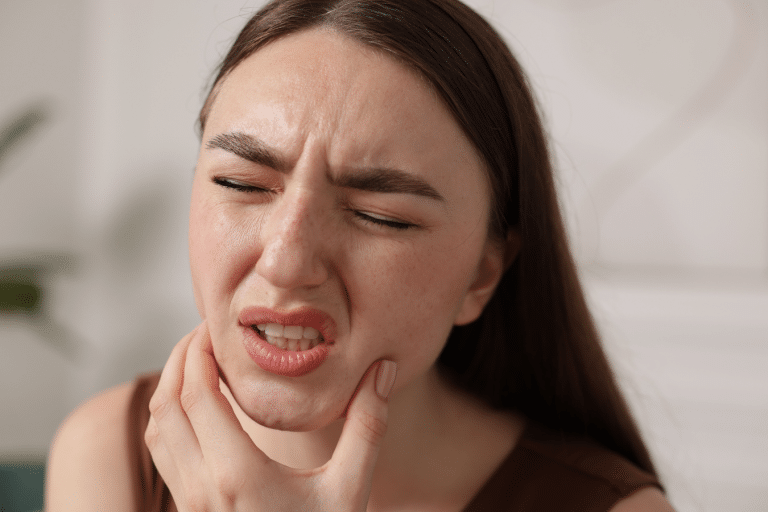

Jaw pain can affect far more than your jaw.

For many people, it shows up as a dull ache through the face, tightness around the temples, headaches, clicking when chewing, or a jaw that feels stiff or difficult to open. It may also come with teeth grinding at night, tension through the neck, or the sense that your jaw simply does not move the way it should.

These symptoms are often linked to TMD, also known as temporomandibular disorder. Many people call it “TMJ”, but that is actually the name of the joint itself. The temporomandibular joint, or TMJ, is the joint that connects your jaw to your skull. When that joint, and the muscles and nerves around it, are not functioning well, it can lead to ongoing pain and dysfunction.

At The Headache Clinic, we are experts in complex conditions involving the head, neck and jaw. That means we look deeper than the obvious symptom. If your jaw is painful, tight, clicking, locking, or contributing to headaches, we focus on finding the true driver of the problem and treating it with precision.

What is TMD?


Temporomandibular disorder (TMD) is a condition affecting the jaw joint and the muscles that control jaw movement. It can cause pain, stiffness, restricted movement, and a range of symptoms through the face, head and neck.

Because the jaw is used constantly for talking, chewing, swallowing and yawning, even mild dysfunction can become highly disruptive. For some people, symptoms come and go. For others, they become persistent and start to affect sleep, eating, concentration and quality of life.

Common symptoms of TMD:


TMD can present in different ways, but common symptoms include:

- Jaw pain or tenderness, often around the joint or muscles
- Clicking, popping, or grinding sounds with jaw movement
- Difficulty opening the mouth fully or reduced range
- Jaw locking, catching, or stiffness
- Pain when chewing, talking, or prolonged mouth use
- Facial pain or a sense of pressure
- Headaches, particularly through the temples
- Clenching or grinding of the teeth, especially at night
- Neck pain and increased muscular tension
- Pain around the ear or a feeling of tightness through the side of the face


In many cases, people do not initially realise their headaches or facial pain could be coming from the jaw.

Why does TMD happen?


TMD rarely has one single cause. More often, it develops because several factors combine over time and place ongoing strain on the jaw joint and surrounding muscles.

Common contributors include:

- Stress and tension
- Teeth clenching or grinding, also called bruxism
- Excessive gum chewing
- Previous jaw injury
- Joint irritation or arthritic change
- Muscle tension through the jaw, face and neck
- Poor coordination between the jaw and upper neck

This is why generic advice does not always work. A mouthguard may help protect the teeth. Resting the jaw may ease symptoms briefly. But if the underlying dysfunction is still there, the pain often returns.

Why jaw problems often trigger headaches


The jaw, head and upper neck are closely connected. When the jaw is not moving properly, the surrounding muscles often become tense and overworked. This can refer pain into the temples, cheeks, behind the eyes and into the head.

For some people, this creates a repeating cycle. The jaw becomes tight, headaches become more frequent, the neck stiffens, and clenching increases, especially during sleep or times of stress.

That is why effective treatment needs to look beyond the jaw alone.

Why TMD is often missed or poorly treated


TMD is common, yet it is often not treated in a truly specialised way.

Many people are told to avoid chewy foods, wear a splint, or do a few basic exercises. While those strategies can sometimes help, they may not resolve the deeper issue if the real problem involves joint restriction, muscle dysfunction, neural irritation, or an associated neck problem.

This is where a more skilled and targeted approach can make all the difference.

At The Headache Clinic, treating jaw disorders is not an afterthought. It is part of our niche with complex head, neck and facial conditions.

Our approach to TMJ and TMD treatment


We provide a expert hands-on physiotherapy approach for people experiencing jaw pain, clenching, grinding, restricted movement and jaw-related headaches.

Your treatment is tailored to the structures actually involved in your symptoms. Depending on your presentation, this may include:

- Targeted treatment to the jaw joint
- Hands-on therapy for the surrounding muscles
- Treatment of associated neck dysfunction
- Careful work around facial and neural tension
- Restoring normal jaw movement and control
- Reducing the cycle of stiffness, overactivity and clenching
- Our aim is not simply to help you cope.

Our goal is to improve how the jaw and surrounding system function, so you can get lasting relief and return to eating, speaking and moving comfortably.

Is clenching and grinding a sign of TMD?


It can be.

Clenching and grinding often place significant load on the jaw joint and the muscles around it. Over time, this can lead to soreness, restricted movement, facial tension, worn teeth and headaches, especially on waking.

For some people, clenching is the main driver. For others, it is part of a broader pattern involving the jaw, neck and nervous system. Either way, it is worth assessing properly rather than simply assuming a night guard will solve it.

When should you seek treatment for jaw pain?

ou should consider an assessment if you have:

- Persistent jaw pain or tightness
- Clicking or locking of the jaw
- Difficulty opening your mouth fully
- Pain when chewing
- Frequent headaches with facial or temple tension
- Teeth grinding or clenching at night
- Ongoing symptoms that are not improving

You do not need to wait until symptoms become severe. Early treatment can often prevent the problem becoming more entrenched.

Why patients choose The Headache Clinic


People come to us because they want more than temporary relief.

They want a clear explanation of what is going on, a clinician who understands the connection between the jaw, head and neck, and a treatment plan that is specific to them.

At The Headache Clinic, we combine clinical expertise with a careful, hands-on approach that is designed to uncover and address the true cause of your symptoms. For patients with TMD, that often means finally feeling understood after months or even years of frustration.

Book a TMJ assessment

If you are dealing with jaw pain, clicking, clenching, grinding, headaches or restricted jaw movement, we are here to help.

Book your assessment today and take the first step towards a more comfortable jaw, fewer headaches, and relief that lasts.

Magnesium and Concussion Recovery

about us
Expert headache, migraine and concussion care, focused on getting to the source of your symptoms for lasting relief.

© 2026 | The Headache Clinic | All Rights Reserved | Designed by