Southland takes the lead in athlete concussion management as Brain Injury Awareness Month comes to a close
By Helen Tufui Physiotherapist | Founder, The Headache Clinic & NAP Pillow
Southland takes the lead in athlete concussion management as Brain Injury Awareness Month comes to a close
In recognition of Brain Injury Awareness Month, Rugby Southland and The Headache Clinic recently hosted a successful Baseline event to raise awareness about the importance of appropriate concussion management for impact sport players.
The event provided an opportunity for players to have their medical and neurological baseline tested and recorded, serving as a reference point for future concussions and significantly reducing the risk of long-term damage.
The Headache Clinic founder Helen Tufui said as many as 35,000 concussions occur in New Zealand annually and players who are returning to sport before the brain has fully recovered from concussion injury can lead to persisting symptoms.
“It takes the brain three to four weeks to recover from a concussion injury, and another injury before full recovery significantly increases the risk for persisting symptoms,” she said.
To address this issue, sporting bodies have mandated stand-downs following a concussion injury, which should lead to a decrease in the prevalence of neurodegenerative disease later in life for these athletes.
The Headache Clinic is leading the way in concussion management, identifying the underlying cause of persisting symptoms to facilitate recovery.
“The neck is often implicated in a concussion injury and has been found to be a key contributor to persisting concussion symptoms,” Tufui said.
The clinic has worked with professional athletes, including the All Blacks, assisting Beauden Barrett to recover from his persisting concussion symptoms in 2022.
A 2016 New Zealand study found almost half of concussion injuries had four or more persisting symptoms a year after their injury. As such, appropriate care was crucial for concussion recovery.
Tufui commented they wanted to acknowledge the importance of appropriate care for concussion and head injury.
“At The Headache Clinic, we are committed to providing leading-edge care for our patients, including professional athletes.
“We are grateful for our partnership with Rugby Southland and look forward to continuing our work to improve concussion management and education,” she said.
Rugby Southland CEO Steve Michel echoed Tufui’s sentiment.
“It’s great to be working collaboratively with a leader in that field and The Headache Clinic team.
“Rule number one for anyone involved in sport should be care and protection of the participant, and this initiative ensures we are looking after our people with the latest developments in concussion management, treatment and prevention,” Michel said.
The Baseline event hosted by Rugby Southland and The Headache Clinic was a success, promoting concussion awareness and education among the rugby and sporting community.
The event showcased the innovative approach of Rugby Southland and The Headache Clinic in prioritising player wellbeing, positioning them firmly as leaders in the field of concussion management.
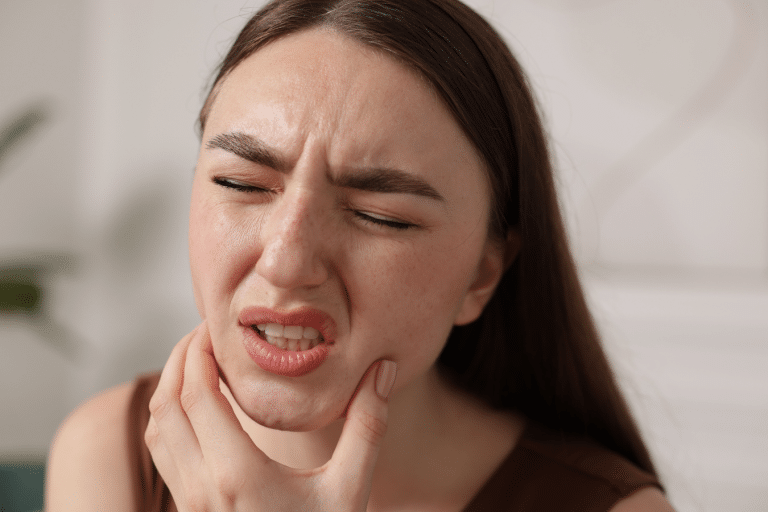
Jaw pain can affect far more than your jaw.
For many people, it shows up as a dull ache through the face, tightness around the temples, headaches, clicking when chewing, or a jaw that feels stiff or difficult to open. It may also come with teeth grinding at night, tension through the neck, or the sense that your jaw simply does not move the way it should.
These symptoms are often linked to TMD, also known as temporomandibular disorder. Many people call it “TMJ”, but that is actually the name of the joint itself. The temporomandibular joint, or TMJ, is the joint that connects your jaw to your skull. When that joint, and the muscles and nerves around it, are not functioning well, it can lead to ongoing pain and dysfunction.
At The Headache Clinic, we are experts in complex conditions involving the head, neck and jaw. That means we look deeper than the obvious symptom. If your jaw is painful, tight, clicking, locking, or contributing to headaches, we focus on finding the true driver of the problem and treating it with precision.
What is TMD?
Temporomandibular disorder (TMD) is a condition affecting the jaw joint and the muscles that control jaw movement. It can cause pain, stiffness, restricted movement, and a range of symptoms through the face, head and neck.
Because the jaw is used constantly for talking, chewing, swallowing and yawning, even mild dysfunction can become highly disruptive. For some people, symptoms come and go. For others, they become persistent and start to affect sleep, eating, concentration and quality of life.
Common symptoms of TMD:
TMD can present in different ways, but common symptoms include:
- Jaw pain or tenderness, often around the joint or muscles - Clicking, popping, or grinding sounds with jaw movement - Difficulty opening the mouth fully or reduced range - Jaw locking, catching, or stiffness - Pain when chewing, talking, or prolonged mouth use - Facial pain or a sense of pressure - Headaches, particularly through the temples - Clenching or grinding of the teeth, especially at night - Neck pain and increased muscular tension - Pain around the ear or a feeling of tightness through the side of the face
In many cases, people do not initially realise their headaches or facial pain could be coming from the jaw.
Why does TMD happen?
TMD rarely has one single cause. More often, it develops because several factors combine over time and place ongoing strain on the jaw joint and surrounding muscles.
Common contributors include:
- Stress and tension - Teeth clenching or grinding, also called bruxism - Excessive gum chewing - Previous jaw injury - Joint irritation or arthritic change - Muscle tension through the jaw, face and neck - Poor coordination between the jaw and upper neck
This is why generic advice does not always work. A mouthguard may help protect the teeth. Resting the jaw may ease symptoms briefly. But if the underlying dysfunction is still there, the pain often returns.
Why jaw problems often trigger headaches
The jaw, head and upper neck are closely connected. When the jaw is not moving properly, the surrounding muscles often become tense and overworked. This can refer pain into the temples, cheeks, behind the eyes and into the head.
For some people, this creates a repeating cycle. The jaw becomes tight, headaches become more frequent, the neck stiffens, and clenching increases, especially during sleep or times of stress.
That is why effective treatment needs to look beyond the jaw alone.
Why TMD is often missed or poorly treated
TMD is common, yet it is often not treated in a truly specialised way.
Many people are told to avoid chewy foods, wear a splint, or do a few basic exercises. While those strategies can sometimes help, they may not resolve the deeper issue if the real problem involves joint restriction, muscle dysfunction, neural irritation, or an associated neck problem.
This is where a more skilled and targeted approach can make all the difference.
At The Headache Clinic, treating jaw disorders is not an afterthought. It is part of our niche with complex head, neck and facial conditions.
Our approach to TMJ and TMD treatment
We provide a expert hands-on physiotherapy approach for people experiencing jaw pain, clenching, grinding, restricted movement and jaw-related headaches.
Your treatment is tailored to the structures actually involved in your symptoms. Depending on your presentation, this may include:
- Targeted treatment to the jaw joint - Hands-on therapy for the surrounding muscles - Treatment of associated neck dysfunction - Careful work around facial and neural tension - Restoring normal jaw movement and control - Reducing the cycle of stiffness, overactivity and clenching - Our aim is not simply to help you cope.
Our goal is to improve how the jaw and surrounding system function, so you can get lasting relief and return to eating, speaking and moving comfortably.
Clenching and grinding often place significant load on the jaw joint and the muscles around it. Over time, this can lead to soreness, restricted movement, facial tension, worn teeth and headaches, especially on waking.
For some people, clenching is the main driver. For others, it is part of a broader pattern involving the jaw, neck and nervous system. Either way, it is worth assessing properly rather than simply assuming a night guard will solve it.
When should you seek treatment for jaw pain?
ou should consider an assessment if you have:
- Persistent jaw pain or tightness - Clicking or locking of the jaw - Difficulty opening your mouth fully - Pain when chewing - Frequent headaches with facial or temple tension - Teeth grinding or clenching at night - Ongoing symptoms that are not improving
You do not need to wait until symptoms become severe. Early treatment can often prevent the problem becoming more entrenched.
Why patients choose The Headache Clinic
People come to us because they want more than temporary relief.
They want a clear explanation of what is going on, a clinician who understands the connection between the jaw, head and neck, and a treatment plan that is specific to them.
At The Headache Clinic, we combine clinical expertise with a careful, hands-on approach that is designed to uncover and address the true cause of your symptoms. For patients with TMD, that often means finally feeling understood after months or even years of frustration.
Book a TMJ assessment
If you are dealing with jaw pain, clicking, clenching, grinding, headaches or restricted jaw movement, we are here to help.
Book your assessment today and take the first step towards a more comfortable jaw, fewer headaches, and relief that lasts.